
English Version | Lip Sync
The Kiss Issue | March 2026
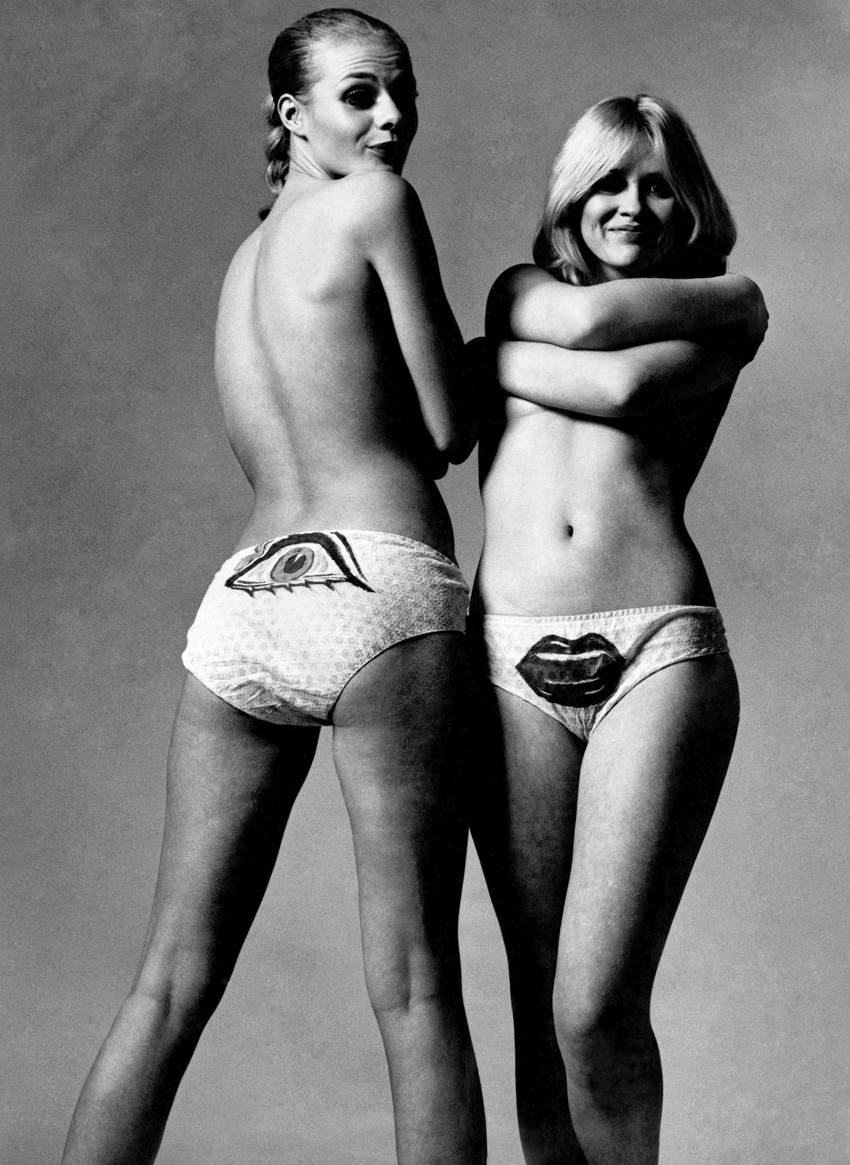
We may not all speak the same language, but when it comes to mouths, we agree on one thing: lips are an inexhaustible iconography for different creative fields.
The relationship between John Pasche and the Rolling Stones wasn't love at first sight. When the British band, looking for someone to design a poster for their 1970 tour, spoke to the Royal College of Art and Pasche, then a master's student, was suggested, his first design proposal was rejected. "I'm sure you can do better, John," Mick Jagger suggested. And he did. So much so that the Stones later commissioned him to create what would become the band's iconic logo, the mythical mouth with the tongue sticking out – which the English group liked so much that they added 200 pounds to the agreed 50. Still, this was a tiny fraction of what the logo earned them, mainly in recognition and marketing, the value of which, looking now at the entire history of the icon, seems incalculable. According to the band, the logo was meant to represent "the band's anti-authoritarian attitude, Mick Jagger's mouth, and the obvious sexual connotations," but Pasche revealed that the design was created with a single objective: to look good on merch.
Without dismissing either interpretation, because both are correct, lips as iconography – these and many others – embody a bit of everything: besides a pleasing aesthetic that appeals to the eye, they are a vehicle for countless interpretations and connotations, not only of physiognomy but also of seduction. Lips are considered a powerful design element due to their natural shapes and attractive geometry with balanced proportions, symbolizing beauty, youth, and emotional expression. Defined by a unique silhouette, with elements like the cupid's bow, they offer a combination of sensuality and symbolic meaning to which various creative industries have not turned a blind eye. “Lips are loaded with meaning, suggesting taste, touch, intimacy, pleasure—all without showing too much. They suggest desire, confidence, rebellion, beauty, power, softness, provocation—sometimes all at once. That's what makes them so interesting. For me, personally, lips generally represent optimism. They hint at communication, expression, and life itself.” Jaap Biemans knows what he's talking about. The creative, a graduate of the Academy of Fine Arts and Design in St. Joost, Breda, Netherlands, and a lifelong expert in visual aesthetics – and awarded for it – is the name behind the popular website and social media platform dedicated to the best print covers, Coverjunkie, which has now even launched a Substack (coverjunkie.substack.com). When we approached him to talk about lips as icons, he wasn't shy about declaring, “I’m a fan!” laughing. “Working with elements of the human body [in design] feels incredibly powerful to me. I prefer close-ups; it’s something I instinctively connect with. Lips, in particular, are unbeatable. They have an incredible color palette, but it’s not just about color. Lips are sensitive, seductive, expressive, and even a little dangerous. For a magazine cover, that’s gold. A cover needs to seduce in a split second, and lips do that effortlessly. Honestly, what more do you need on a cover?”
On album covers and beyond: the mouth as a silhouette has served as inspiration for many more areas beyond glossy covers. Lips have been a popular theme in albums, posters, paintings, photographs, fashion, and advertising. The iconic lips of Pop Art, created by artists like Andy Warhol, highlighted them as a symbol of modern culture, something that Surrealism had already majestically foreshadowed: starting, for example, with Man Ray. His work The Lovers (1936), or as it became better known, The Lips, was described as a supreme example of isomorphism, the use of organic forms that peculiarly and obliquely allude to Man, in a kind of realistic and meticulous illusionism – the unifying theme of the dominant Surrealist art at the height of the 1930s. In fact, the one who became forever linked to surrealist lips was the unavoidable Salvador Dalí. The painter was in London in 1936 for the International Surrealist Exhibition and, at the time, was completely broke, so he struck a deal with Edward James, a wealthy British poet who had inherited his fortune from his parents, as well as the country estate in West Dean, West Sussex, and who became Dalí's patron. James converted one of the buildings on this estate, Monkton House, into a private surrealist retreat, filling it with his collection of surrealist art. A notable patron of Salvador Dalí (and René Magritte) – he also supported the surrealist magazine Minotaure – Edward was passionate about furniture and sponsored all of Dalí's production for an entire year, partly for his own enjoyment. Undergoing some renovations, James asked Dalí to design and manufacture some furniture for him – and thus the Mae West sofa in the shape of lips was born. Today, the piece of furniture is not only iconic, it is still a catalyst, an unmistakable trait of the Spanish designer, for other pieces not only in decoration, but also in fashion.
Fashion, even today, uses lips as a trump card on the catwalk, as it has done for decades, and one of its most mythical names still sees lips as the unmistakable body of her work – Elsa Schiaparelli unleashed the influence of Surrealism in fashion; after all, she was part of it. In constant collaboration with avant-garde artists such as Dalí and Jean Cocteau, Schiaparelli was fashion's answer to art, and perhaps her most lasting legacy is these lips which, like the Mae West sofa, have found their place in brooches, embroidered dresses, hatpins, earrings, an inevitable motif throughout her work. Like Dalí's Mae West, these lips changed the world: the Surrealists brought the erotic, the sexual, the strange, the mysterious from art to wearable manifestations (or sofas to sit on). After her, many high-end designers and fashion houses, such as Yves Saint Laurent, Miuccia Prada, and Gucci, though not in the same surrealist way, incorporated lips as a silhouette or pattern in looks that seemed to become instantly infallible – a characteristic that other areas also recognize in her. In photography, a close-up of glossy lips often appears in beauty advertisements, attracting attention and creating desire. Even digital media now revolves around lips: emojis, selfies with full lips, and makeup tutorials on how to achieve the "perfect red lip" flood platforms like Instagram and TikTok. The fascination with lips, especially red ones, has only grown over time.
Speaking of which – is it the silhouette or the color that matters when it comes to impact? “Color is crucial. Red lips are almost instinctive. Red signals passion, danger, confidence, love, and urgency—everything that instantly grabs attention. Choosing red is usually a very conscious decision, especially when the goal is to make an impact,” points out Jaap. “That said, removing color from the lips or choosing unexpected shades can be equally impactful. A black and white lip can have a graphic and timeless look. An unnatural color can seem futuristic or subversive. Success lies in how the color reinforces the message you want to convey.” Indeed, the color red is often associated with passion, desire, and attraction, making crimson lips inherently appealing. Studies in color psychology suggest that red can increase your heart rate and create a sense of urgency, which may explain why cherry lips—even those that appear in 2D, as iconography—are often seen as captivating and seductive. The boldness of red lips can also boost self-confidence, allowing people to express their personality and stand out. The modus operandi is not new: scarlet lips have long been a symbol of beauty and charm, dating back to ancient civilizations. In Ancient Egypt, men and women used red ochre and carmine to dye their lips, symbolizing status and beauty. The trend continued throughout the centuries, with the Elizabethan era adopting vibrant red lips as a sign of wealth and power. The 20th century saw the rise of Hollywood icons like Marilyn Monroe and Elizabeth Taylor, who popularized the red lip look, cementing its place in modern beauty standards. And is it still possible to reinvent them as iconography, after so many creative areas have explored it exhaustively? Jaap Biemans is quick and assertive in his response: “Of course it’s possible. That’s exactly what design and art are all about. Lips are incredibly versatile. The challenge isn’t to avoid what’s already been done, but rather to bring your own perspective. Yes, people have seen lips before. But they haven’t seen your lips, through your lens. That’s where originality lies.”
Tools of expression, art, and freedom, lips remain one of the most expressive parts of the body, used by all human beings to convey thoughts, emotions, and beauty. And they continue to do so in illustrated forms, as iconography, because even without uttering a word, they say a great deal. Curiously, not always good things: among medieval symbolism, it was believed that lips printed on a dress represented someone gossipy or complaining, as apparently depicted in the tapestries of Edward Burne-Jones and William Morris based on the poem The Romance of the Rose, translated by Chaucer. This makes some sense – the verb "gossiping" originates in the Middle Ages, and it was during this time that the dreaded Bridle of Reprimand began to be used as a form of punishment for gossipy or quarrelsome women. Fast forward a few centuries, and the about-face is not without irony, as they are also associated with female empowerment. “Aesthetically, lips already have a perfect shape: symmetrical, yet organic; striking, yet soft. As a silhouette, they are immediately recognizable—they don't need details to work,” points out Jaap. “But their true strength lies in what they represent. Lips carry emotion and narrative. They can convey a playful, political, erotic, ironic, or iconic feeling, depending on how they are approached. This combination—visual clarity coupled with emotional weight—is what makes them so powerful in design,” concludes Biemans. And immortal, we would add. Pasche confirms this, since, when imagining the iconic Stones logo, he confessed that he did it thinking about its timelessness. It worked, corroborates the Coverjunkie creative: “This logo still looks modern and cool, and that says it all. Lips don't belong to a trend—they belong to Humanity. As long as there are people, lips will exist; they will never lose their relevance,” the creative director emphasizes.
Translated from the original in The Kiss Issue, published March 2026. For full stories and credits, see the print issue.
Most popular
.jpg)
 By Sara Andrade
All articles
Relacionados

.jpg)